A look at Ineos from the inside gives a lot more perspective on the brand
A few weeks ago, we examined — and lamented — the idea that Ineos might be on the way out. With unclear sales figures and recent job cuts miring the brand, there wasn’t a lot of silver lining to find. However, after an exclusive interview with Gregor Hembrough, Executive Vice President of the Americas region, we think there’s a little bit more to the story. With concrete sales figures (for the Americas regions) and C-suite insight into where the brand’s future lies, Hembrough painted a very different picture of the fledgling off-road brand.
How things are really going at Ineos
Tracking down global sales figures for Ineos has never been easy. However, we know that around 60% of the company’s sales come from the United States, and Hembrough was able to provide us with fairly concrete numbers for the Americas. “We have about eleven and a half thousand units on the road already, after two years in the marketplace,” Gregor told me. That 11,500 number includes Mexico and Canada — the former of which is home to around 200 trucks and the latter approximately 500 by the end of the year. Those numbers aren’t inflated by rental or fleet sales, either. “This has all been done through the sales channel,” Hembrough says. “All this has been done through the retail channel.” It might sound like a small detail, but including rental and fleet sales in sales volume isn’t unusual and has a way of turning good sales figures into great ones. Hembrough remarks that fleet sales bolster some automakers’ numbers by “10 to 15 percent of annual sales.”
The brand is up 32% year-over-year in October, a trend that Hembrough says carries into November. December, too, should represent a gain for the brand, as Hembrough says orders are up 44% compared to this time last year. Ineos knows, more or less, who’s buying their trucks, too. “Our average household income is $150,000,” Hembrough starts, “and the target customer is 50 years old.” To put that in perspective, the average household income of a new BMW buyer is around $175,000, and the average age is mid-forties.
But Hembrough insists Ineos trucks are “class-less.” Their ubiquity makes them a choice for many walks of life. “It’s not unusual to see a farmer right now running around the UK and hauling sheep and goods in the back of the car,” he starts. “At the same time, you know, West End of Los Angeles, the Hamptons, it’s become a vehicle for the school runs or showing up at a boutique restaurant as well.” The ubiquity is reflected in some of the dealer trade-ins Hembrough has encountered: a half-dozen Cybertrucks, some Rivian trucks, and even a Ferrari F40. Perhaps predictably, most trade-ins aren’t this unusual: Hembrough claims the bulk of customers come from the Land Rover Defender, Jeep Wrangler, and Ford Bronco.
Hembrough suggests the best may be yet to come for the brand
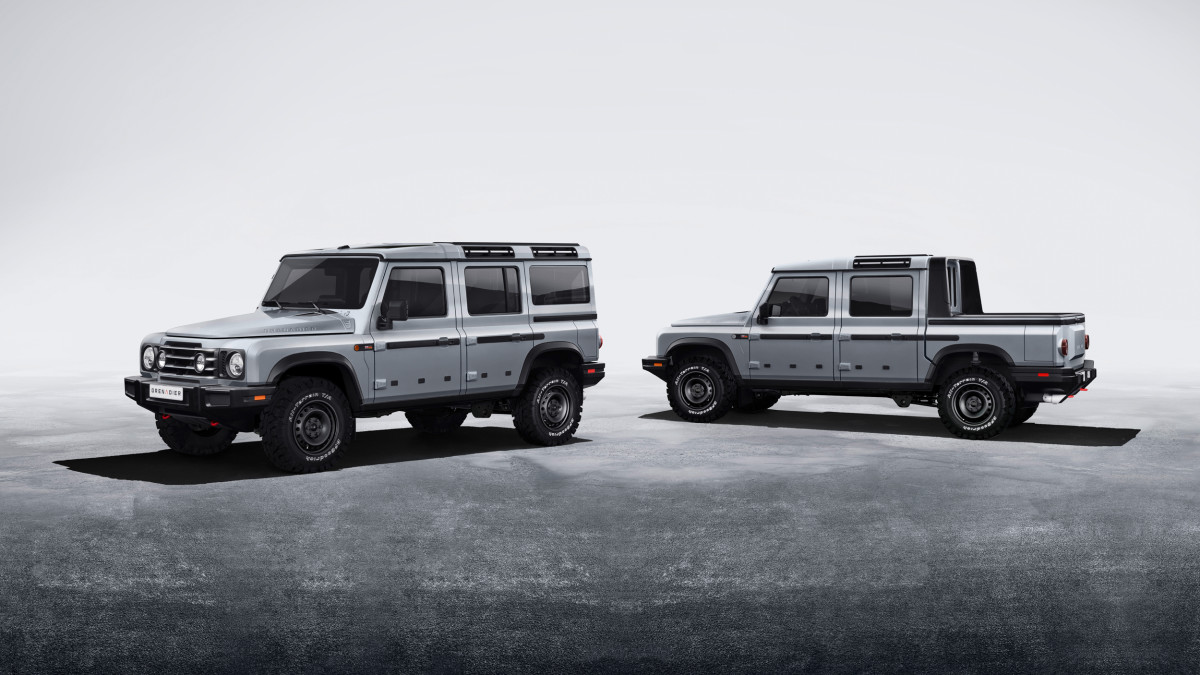
Overall, then, things at Ineos could, at least from a bird’s eye view and through a lens that considers the company a “startup” — not an unfair characterization — be considered to be going well. Hembrough implies that 2026 will be a big year for Ineos; he says the brand is “pulling forward” with an early mid-lifecycle refresh that will see a batch of updates for the trucks. Most automakers wait a little longer into a product’s lifecycle than the mere three years the Grenadier has been on sale for. “We’ve really listened to the customers from our quality surveys, their wants and wishes of what they would like to see in the vehicle,” he starts. ”The way it handles, some of the attributes of the vehicle that we know are not shortcomings of the car, but something that customers just want, maybe road noise or better road feeling. Those are all things we’re bringing into model year 26 already.”
View the 2 images of this gallery on the
original article
That’s great news, especially since Hembrough claims customers are already trading in trucks early just for things like new colors and added wheel selections. “It just shows the passion they have for these vehicles,” he says. Passion is key for Ineos — and if you need proof, look no further than the brand’s Freehold, NJ, dealership, which built an off-road course of its own for test drives. There are also several grassroots Grenadier communities organizing drive events, building a new off-road community all on their own. This sort of passion and community-mindedness is something Hembrough hopes to integrate even deeper into the brand DNA as time goes on. Whether that manifests itself in a dedicated off-road center for the brand, community drives, or something else entirely remains to be seen. Hembrough also drops hints at an increased focus on influencer marketing: looks for more influencers and “brand ambassadors” coming to your feed soon.
Finally: new models and the looming specter of electrification. Hembrough doesn’t think electrification is something Ineos needs to look at apprehensively. “The way I look at it is, there’s always the core of the brand, and there’s brand extensions,” he says, pointing to Land Rover and Range Rover. While Grenadier will always be the “core of the brand” according to Hembrough, there’s room for other models. “We have aspirations for a smaller car, we have aspirations perhaps for a seven-passenger vehicle, too,” he says. “As a business, to be successful, we need a profitable car line and an extension of the portfolio. We will do both.”
Ineos
Ineos is new, but the people behind it aren’t
Even though Ineos has only effectively been selling cars for two years, they perhaps aren’t the new kids on the block they seem to be. Hembrough is beyond qualified to serve as the brand’s Executive VP of Americas, with nearly 35 years of experience in marketing and sales, primarily with Volvo and Polestar. While George Ratcliffe, President of the Americas for Ineos Automotive and son of Ineos Chairman Jim Ratcliffe, conspicuously lacks automotive experience on par with Hembrough’s, “he brings an opportunity to really ensure that the voice of America’s marketplace resonates extremely loudly within the global headquarters,” Hembrough says.
He suggests that brands often struggle to see themselves outside of their home markets. “George brings a great opportunity of really understanding what the American market needs, Canada, U.S., and Mexico, and make sure that gets prioritized on the agenda very, very quickly.” At Ineos, getting international feedback and communication back to headquarters is apparently not a process marred by the “xenocentrism” Hembrough suggests plagues other automakers. Remember how long it took BMW to figure out cupholders?
Final thoughts
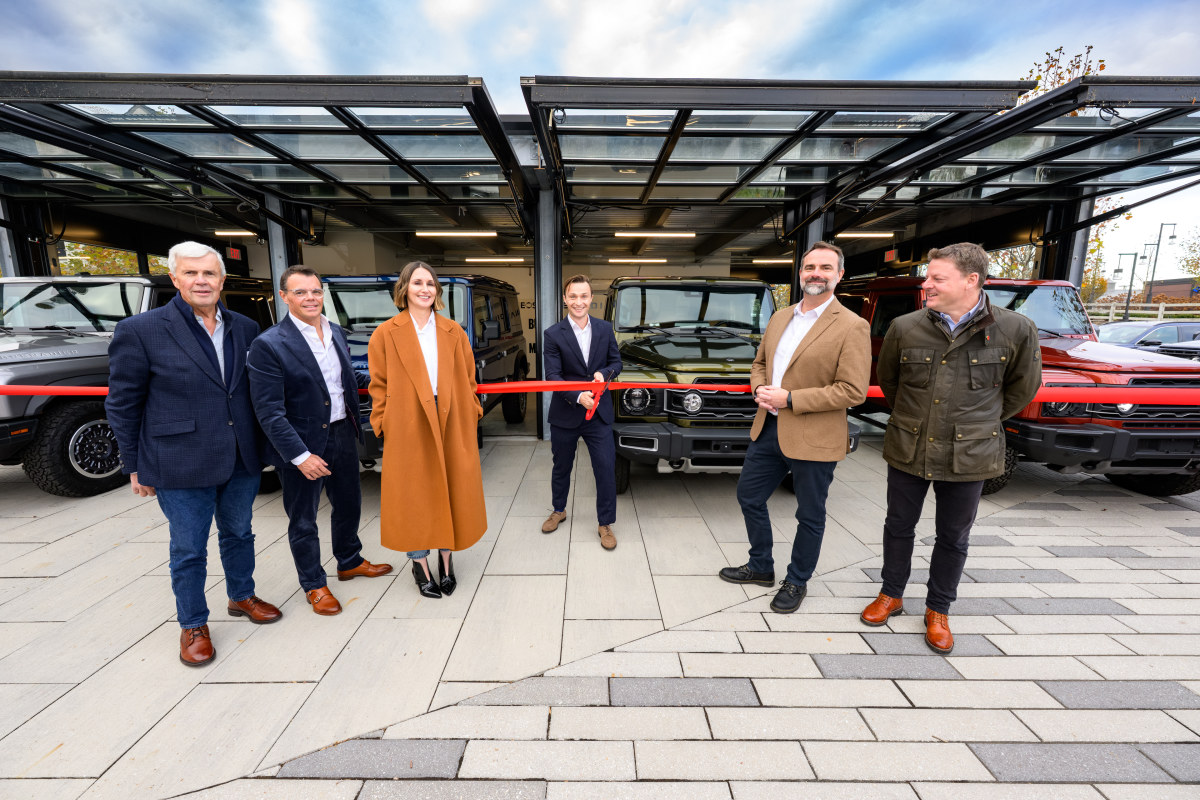
Gregor Hembrough is an enthusiast in his own right. The former Polestar head honcho recalls how he came into the job with as much passion as I’ve seen from Porsche owners as they rattle off rare option codes and chassis designations. “Rarely in life do you get to launch a car company, never in life do you get to do it twice,” he told me. When the call came in from Ineos, “the answer was, obviously, hell yes,” Hembrough continued. “It was about what the product was. I really fell in love with what they were doing.” Just under 40 dealerships, a claimed billion dollars in revenue, and a passionate customer base (and at least one executive) of early adopters, in around two years. Oh — and a new Americas headquarters that opened at the end of November. It’s enough to make you think that Ineos is a brand that still has some gas in the tank.
