A little help from the French
In a statement released early on December 9, Ford announced that it has entered a “strategic partnership” with the Renault Group to advance the next phase of what it bills as its “European transformation,” as it recommits to its customers in the region with a new strategy. According to the announcement, the Blue Oval and its new French allies have agreed to jointly develop two Ford-branded vehicles based on Renault’s Ampere platform, aiming to build new cars efficiently using a shared architecture.
Ford says its newfound partnership will combine the Oval’s and Renault’s expertise, industrial scale, and supply base while delivering the efficiency and production scale needed to compete in Europe, a region it describes as “highly dynamic.” Despite its commitment to using Renault’s technology in its new project, Ford says it will lead the design of the upcoming models and ensure they have the driving characteristics befitting the badge. “Our plan is about unleashing the Blue Oval,” said Jim Baumbick, president, Ford Europe. “We are leveraging strategic partnerships to ensure competitiveness, but we are obsessing over the product. These will be fun-to-drive, fully connected vehicles that stand out from the crowd.”
View the 3 images of this gallery on the
original article
This isn’t Ford’s nor Renault’s first rodeo with platform sharing
Ford’s European lineup differs significantly from its United States lineup, as it doesn’t officially sell any pickup trucks or body-on-frame large SUVs, such as the Expedition, in the region. In recent years, it has been expanding its electric portfolio with models like the Puma Gen-E hatchback and has enlisted Volkswagen’s help to enhance its EV offerings. Recently, it introduced the Explorer, an EV based on the Volkswagen ID.4, and reintroduced the Capri as a sloped-back, fastback-style electric crossover based on VW’s ID.5.
View the 3 images of this gallery on the
original article
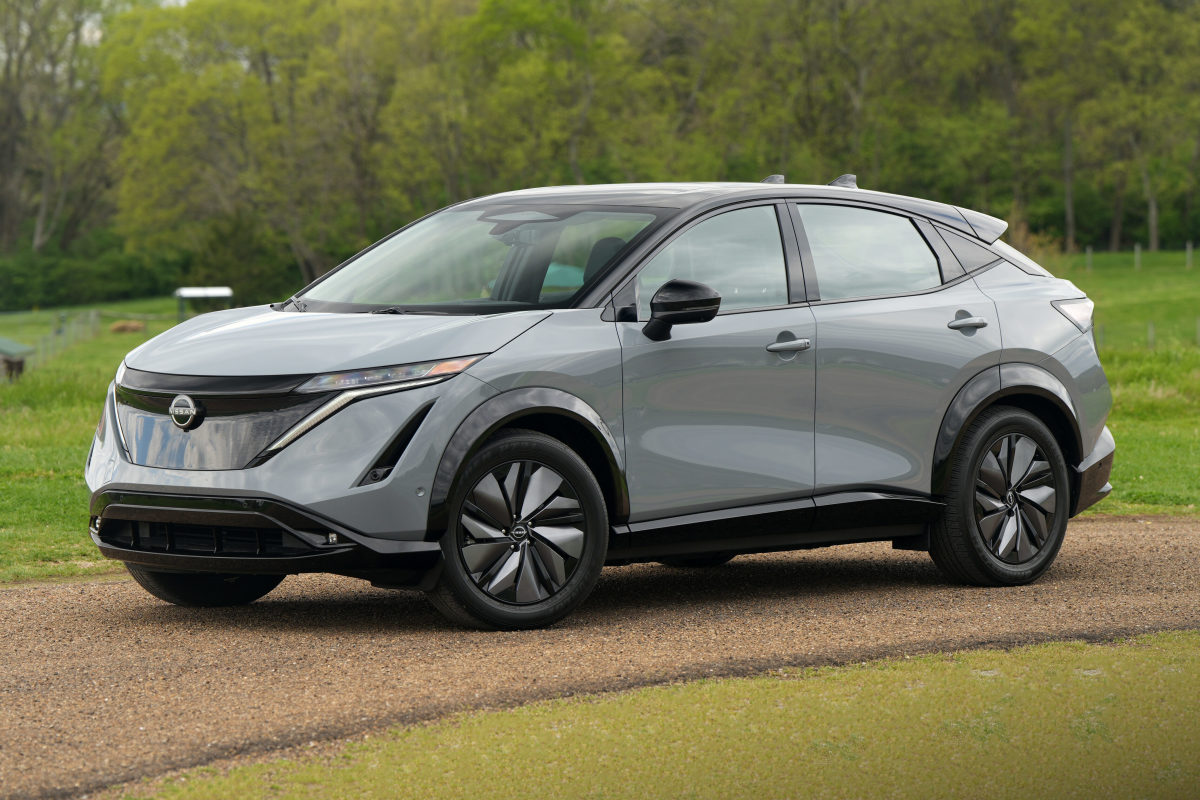
The first of two vehicles based on Renault’s Ampere platform is scheduled to arrive in early 2028; however, Ford and Renault were mum about any further details regarding these models. Renault is no stranger to platform sharing, as its AmpR platforms underpin a variety of electric vehicles sold in markets outside the EU. Renault’s AmpR Small platform underpins smaller cars, including the Renault Twingo, the Renault 4, Renault 5, Alpine A290, and the Nissan Micra. Meanwhile, Renault’s bigger AmpR Medium platform is used to build the Renault Megane, Renault Scenic, Alpine A390, and the Nissan Ariya. In addition to working on its passenger cars, Ford also noted that it has signed a letter of intent with Renault to develop and manufacture small vans.
Kyle Grillot/Bloomberg via Getty Images
Ford calls on the EU to enact realistic emissions regulations.
In the same statement announcing its partnership with the French automaker, Ford noted that its broader European strategy is “designed to navigate Europe’s evolving CO2 emission regulations,” as it aims to provide its loyal customer base with a choice of electrified vehicles, whether full-on EVs or hybrids. At the same time, the company proposed three steps to the EU, which it claims are crucial to achieving its CO2 targets. First, it proposed to “align CO2 targets with actual market adoption,” and also provide automakers with a “realistic and reliable 10-year planning horizon,” which it says could give customers the option to drive hybrid vehicles for longer if they aren’t ready to switch to an EV.
Ford also proposed that European governments must match the “hundreds of billions” that continental manufacturers have poured into EVs, in the form of buyers’ incentives and a “charging infrastructure that extends beyond wealthy urban centres into the rural heartland.” In addition, the Oval called on the EU to ease its “Aggressive CO2 targets,” calling them an “economic tax on the backbone of Europe” that targets small businesses like plumbers, florists, and builders; businesses it claims to “generate more than 50% of Europe’s GDP.”
“We need to enable everyone to benefit from electrification and letting customers choose – whether that’s fully electric or hybrid vehicles,” Baumbick said. “It is about making the transition more attractive and more affordable for all consumers and businesses, stimulating demand rather than stifling it.”
Related: Ford CEO Warns Europe Its EV Rules Are “Risking the Future” of Its Own Carmakers
Final Thoughts
Despite its American roots, Ford is considered a major contributor to the European auto market, as it has a history of selling cars that shaped motoring on the continent. This announcement comes shortly after Ford CEO Jim Farley warned in a Financial Times op-ed that aggressive emissions targets, local-content demands, and shifting bans on combustion engines in the EU are creating an environment that makes it harder to invest in new vehicles and factories.
Specifically, he pointed out that while European policymakers call for a sustainable auto industry through “unrealistic regulations,” these regulations create a “recipe for turmoil” when changes occur frequently and “consumers do not show up.” “On one side, we face the world’s most aggressive carbon mandates, regulations that demand a pace of electrification that is decoupled from the reality of consumer demand,” Farley said. “On the other, we face a flood of state-subsidized EV imports from China, structurally designed to undercut European labour and manufacturing.”
Related: New Tech Could Make Drunk Driving in a BMW a Thing of the Past
